Research
Dissertation: Mulching Molinia
"Exploring the impact of mulching Purple Moor-grass (Molinia caerulea) on lowland raised bog restoration in Greater Manchester."
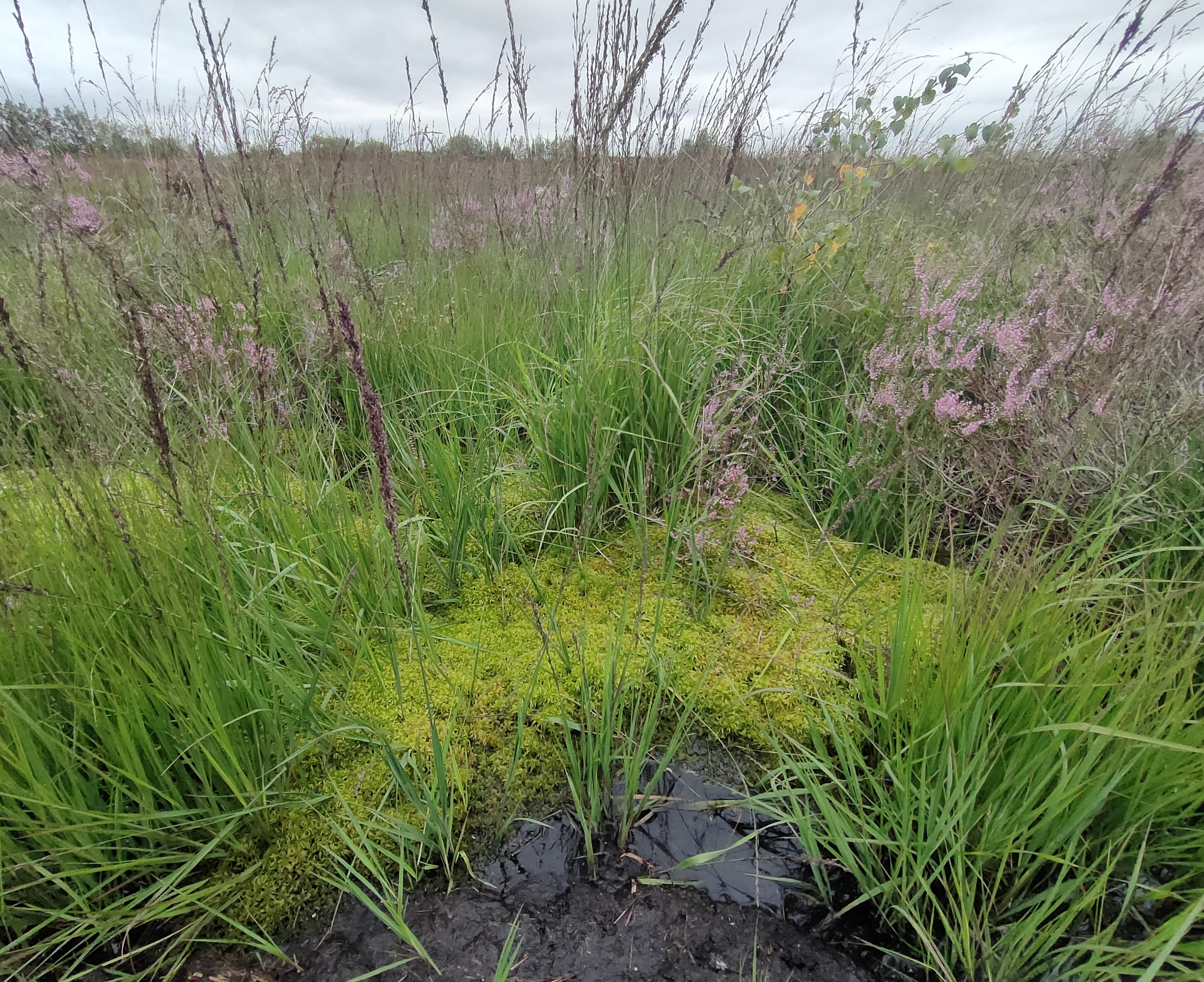
Peatlands are habitats for rare species, and valuable carbon sinks, however are threatened by anthropogenic activities. Lowland raised bogs are especially degraded from land-use, with restoration hindered by Purple moor-grass (Molinia caerulea) encroachment which dries out and enriches peat. Reducing Molinia dominance helps restore diversity and peat function to peatlands.

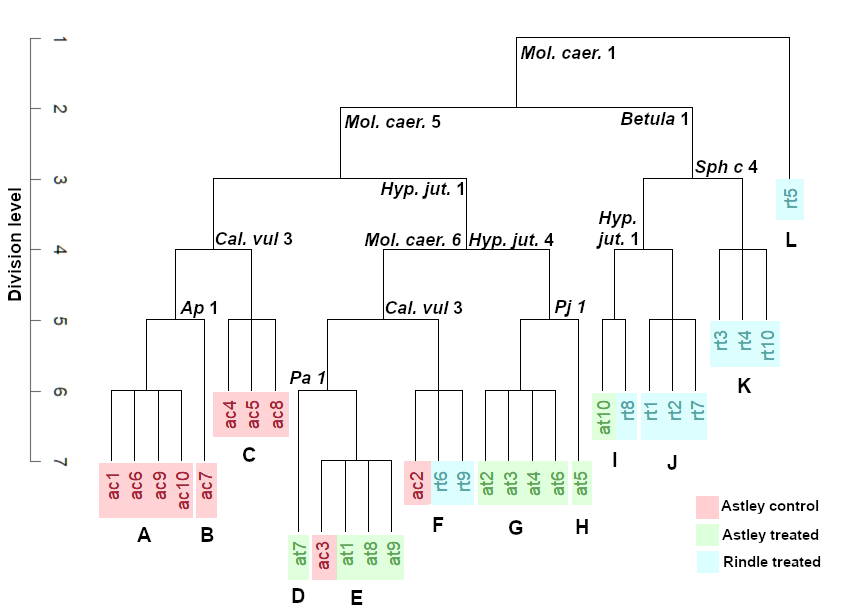
This study explores whether mulching vegetation reduces Molinia dominance and restores peatland function on damaged bogs. Mulching has been trialed on bogs degraded by drainage, peat-cutting and Molinia encroachment: vegetation is cut very low (‘flailed’) and the litter left on the peat surface. Three sampling sites in Greater Manchester were compared: one unmulched control to two sites mulched in Winter 2022/23. Vegetation surveys comparing plant communities focused on diversity, and the abundance of Molinia and wetland indicator species like Sphagnum mosses. Because hydrology controls wetland species distribution, the impact of differing water tables on vegetation was explored. At Rindle, peat samples were analysed for variables like bulk density and nutrients to explore the peat-vegetation interface.
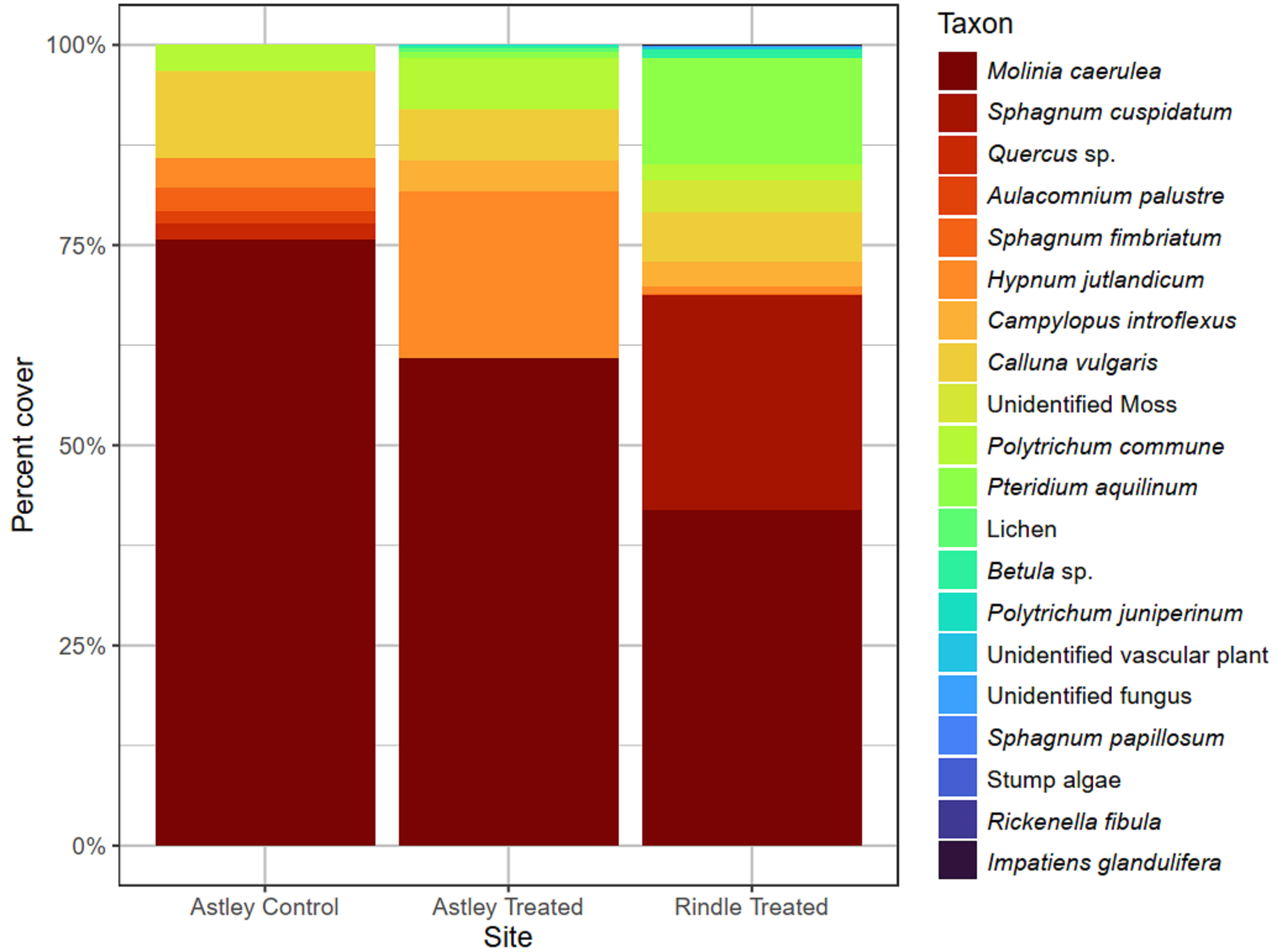
Mulching reduced the dominance of Molinia at treated sites, increasing floristic diversity and wetland indicator species. However, low water table at Astley limited Sphagnum growth, while inundation at Rindle allowed Sphagnum to compete with Molinia. Raised bog vegetation requires a high water table, so mulching alone was not sufficient in restoring peat function. At Rindle, relationships between vegetation and nutrients indicated slowed decomposition and peat-forming processes, and Molinia increasing peat nutrients. Continued monitoring, and research further exploring the peat-water-vegetation interface is recommended.
Marine Invertebrates on a disused Oil & Gas platform
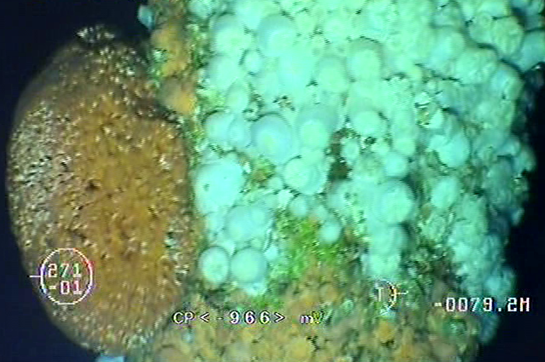
During my Year in Industry, which I completed as part of my degree, I interned at Ocean Science Consulting Ltd in Dunbar, Scotland. At the time they were doing a machine learning project to try and make a tool to identify marine invertebrates growing on a disused O&G platform. I annotated 1000 images taken from structural audit footage, got RSI in my right shoulder and got to analyse my data. Here is the result of that, showing the marine invertebrate assemblage on the legs of an O&G platform at different sea depths. This information is important when deciding what to do with O&G platforms after decommissioning: should they be removed? Or do they function as artificial reefs?